
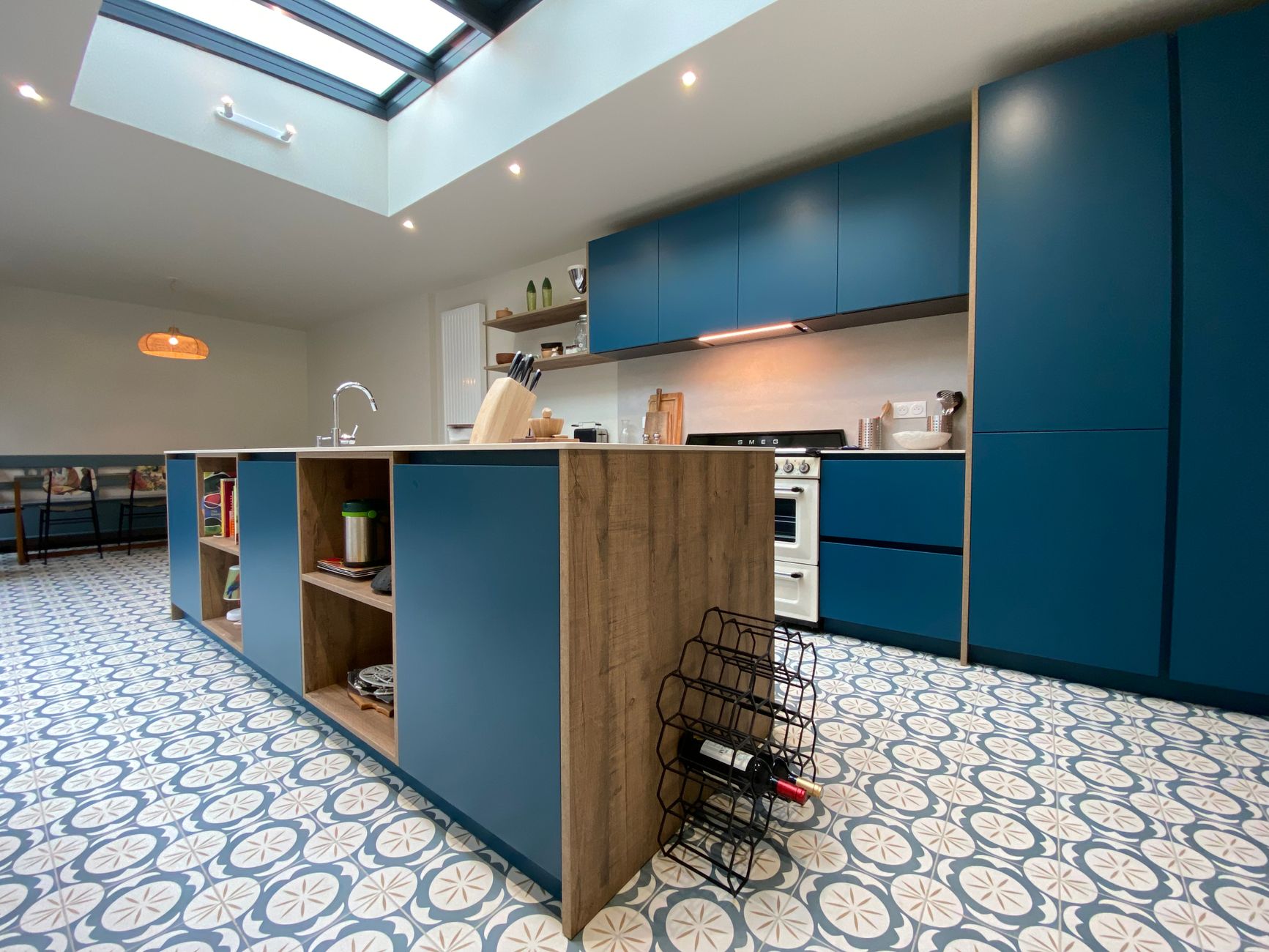
It started, as these things usually do, with a coffee mug and a bad decision. I set the mug down on a corner of the kitchen counter that had been slowly peeling away from the wall for months, and the whole edge gave a little groan. That was the moment I realized I’d been living around my house’s problems instead of actually dealing with them. The junk drawer that wouldn’t close. The paint scuff by the back door I’d stopped seeing years ago. The kitchen that looked fine in photos but felt tired the second you walked in.
Most of us have a mental list like this. It lives somewhere between “I’ll get to it eventually” and “I’ve completely stopped noticing.” And then one small thing—a groaning countertop, a guest coming to stay, a rainy Saturday with nowhere to be—pushes it to the top.
The tipping point most homeowners recognize
My neighbor Dana was the one who finally nudged me. We were standing in her driveway while our kids argued over a scooter, and she mentioned she’d just finished redoing her front room. I’d assumed she’d done it herself, because that’s the kind of person she is—the type who reupholsters chairs for fun. But she laughed and said no, she’d brought someone in for the parts that mattered.
“There’s a difference,” she told me, “between wanting to change something and actually knowing how to make it look right.” That stuck with me. I can paint a wall. I cannot, it turns out, choose a color that doesn’t make my kitchen look like the inside of a lunchbox. I’ve tried. Twice.
The truth is, home projects fall into two piles. There’s the stuff you can genuinely handle on a free weekend with a screwdriver and some patience. And then there’s the stuff where a little professional help saves you from living with a mistake for the next decade.
Knowing when to call for backup
I’m a big believer in doing what you can yourself. Tightening cabinet hinges, swapping out drawer pulls, touching up trim—these are satisfying, and they cost you nothing but an afternoon. But somewhere around the point where I started measuring for a new backsplash and realized I had no plan, no eye for it, and no idea how the finished thing should feel, I stopped.
That’s when I started looking into people who do interiors for a living. Not a full gut-renovation crew—I wasn’t tearing down walls—but someone who understands how a room should flow, where the light lands, and why the thing you love in a showroom looks strange in your actual house. A friend from work had used a team that helps homeowners rethink a space after her family outgrew their kitchen layout, and she said the biggest value wasn’t the fancy finishes. It was having someone who could look at her chaos and see a plan.
I liked that. I didn’t need someone to tell me what was trendy. I needed someone to tell me what would still feel right in five years, when the trend had moved on and I was still standing at that same counter making toast.
The parts you can’t see are the parts that matter
Here’s the thing nobody warns you about when you start “just refreshing” a room: you open one thing and find three others. When we pulled back that peeling counter edge, we found some questionable work underneath from a previous owner. Nothing catastrophic, but enough to make me glad I hadn’t just slapped caulk over it and hoped.
That discovery sent me down a small rabbit hole about the difference between cosmetic fixes and structural ones. A lot of what makes a home feel solid isn’t the paint or the tile—it’s whether the bones underneath are sound. For anything involving how the space was actually built, I learned it’s worth talking to people who handle the construction side properly. A colleague who’d renovated an older property told me he’d leaned on a firm that manages the building side of home projects so that the pretty parts had something reliable to sit on top of.
It made sense once he explained it. You can have the most beautifully styled kitchen in the neighborhood, but if the cabinets aren’t hung level or the surface underneath your new counter is uneven, you’ll fight that room for years. Getting the structure right first isn’t glamorous. It’s just smart.
Setting a budget that’s honest with itself
I went in convinced I could do the whole thing for less than I actually spent. That’s normal. Everyone underestimates. What helped was breaking the project into “must,” “should,” and “someday” columns before I got emotionally attached to anything.
The countertop and the underlying repair were musts. New paint and better lighting were shoulds. The pantry reorganization I’d been dreaming about was firmly a someday—and honestly, a rainy afternoon and some cheap baskets handled most of that anyway. Keeping the list ranked stopped me from blowing my budget on the fun stuff and running out before the important stuff got done.
One tip I’d pass along: don’t decide everything at once. I made a couple of choices early, lived with them for a week, and changed my mind on the cabinet color before anything was permanent. A week of second-guessing is free. Redoing a finished cabinet is not.
The little routines that keep it looking good
The strange thing about finally fixing a space is how it changes your habits. I used to let mail pile up on that broken counter corner because, well, it was already a mess. Now that the kitchen actually looks the way I wanted, I find myself wiping it down more, clearing clutter faster, noticing when something’s out of place.
Dana warned me about this too. “You’ll get precious about it for a while,” she said, and she was right. But underneath the fussiness is something genuinely nice: I like being in the room now. I linger over coffee instead of grabbing it and leaving. My kids do homework at the counter instead of scattering across the living room floor.
What I’d tell the version of me from six months ago
If your house has a slow-brewing list like mine did, here’s the short version of what I learned. Do the small things yourself—they build momentum and cost almost nothing. Be honest about which jobs are beyond your skill, and bring in help before you create a problem instead of after. Sort out the structure before the styling. And rank your budget so the important work gets funded first.
Mostly, though, don’t wait for a groaning countertop to force your hand. That coffee mug did me a favor, in the end. It just took a peeling laminate edge and a driveway conversation with a neighbor to finally get me moving on something I’d been ignoring for far too long. The room’s been done for a couple of months now, and I still catch myself standing there some mornings, a little surprised it’s mine.